Learning and Co-Creation Labs
Exploring governance, advocacy, and artist-led collaboration to design a Shared Leadership Model.
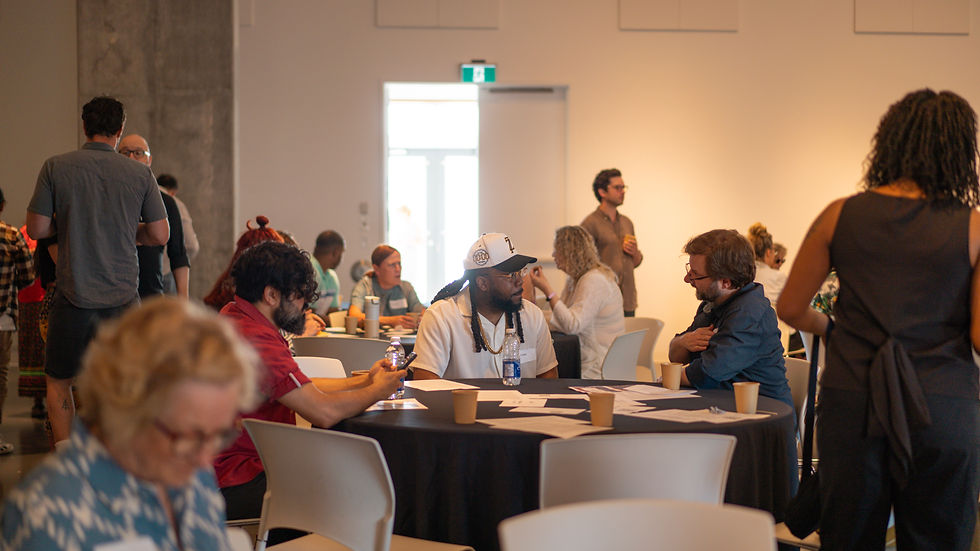
Photo: Quest
.png)
Arts Ottawa is engaged in strategic conversations with public and private partners in relation to emerging cultural infrastructure development opportunities across the city.
This work focuses on ensuring sector-informed input is considered in broader planning processes by advocating for clear, consistent data collection and evaluation measures to be embedded throughout.
The goal is to build a practical evidence base that helps the sector better understand the logistics and feasibility of opening and sustaining arts-led spaces, including what is realistically achievable for smaller organizations and what conditions support long-term sustainability in independently run arts spaces.
This stream of work supports a longer-term horizon goal of positioning the arts sector to be ready to engage with, respond to, and help shape major civic cultural infrastructure as these opportunities emerge across the city.
Research, Advocacy & Planning
The State of the Arts Map is an evolving research tool designed to strengthen Ottawa’s arts ecosystem by making its assets, resources, and opportunities more visible and connected. The map will identify and document creative infrastructure across the city, like studio spaces, learning environments, and community hubs, while capturing key information about their features, uses, and the resources that flow through them.
By providing a clearer picture of what already exists and where gaps remain, the project helps break down silos, foster collaboration, and improve access to spaces and resources. The result is a more connected, informed, and resilient arts community, better equipped to support growth, advocacy, and long-term sector development.
A collaboration with Memetic Media and Carleton Immersive Media Studio (CIMS) Lab.
State of the Arts Map
Learning Cohort
Launching in fall 2026, this Learning Cohort supports people who are working toward creating physical arts and culture spaces. Through mentorship, resources, and peer learning, participants will receive practical support as they take the next steps toward bringing their vision to life.
In exchange, participants will contribute to a shared learning process by documenting key aspects of their journey, helping capture what it actually takes to create and sustain an arts and culture space. Through guided reporting, the cohort will track challenges, costs, timelines, relationships, and decision-making processes involved in developing a space. This information will create valuable knowledge for the sector, helping identify barriers, gaps, and opportunities while strengthening support for future arts and culture space projects.
The 300 Sparks Street Pop-Up is made possible through the generous support of Crown Property Management Inc, who recognize the placemaking and engaging power of artists. This summer activation, led by Cre8, provides artists with a platform to showcase their work as well as bringing more creative life to our downtown.
This pop-up will also serve as a live feasibility study. By observing how the space is used, including foot traffic, visitor engagement, and operational realities, the project will help build a clearer understanding of what it takes to activate and sustain arts and culture spaces in downtown settings. This dual purpose allows the initiative to both animate the street in the present and generate valuable insight to inform future placemaking and space activations.
Sparks Street Storefront
A storefront activation on Bank Street will transform vacant commercial space into a public-facing arts venue. Aligned with the ACE District vision the project will increase the visibility of arts and culture while bringing new energy to the street.
The initiative benefits landlords by activating vacant spaces, creates opportunities for future tenants, and helps revitalize the downtown core by bringing community engagement and restoring energy, creativity, and foot traffic to one of the city’s main streets.
Vacant Storefront activation
Arts Ottawa’s Learning Labs are a key part of our commitment to building capacity across the local arts sector. Through professional development opportunities, knowledge sharing, and collaborative learning, the program supports artists and arts organizations in strengthening skills, expanding networks, and responding to evolving community needs.
By investing in continuous learning, the Learning Labs help build a more resilient, connected, and sustainable arts ecosystem, enhancing the capacity of individual artists, organizations, and Arts Ottawa alike.
Learing Labs
Happening now in Shared Ground:
2026 Learning Lab Series: Community Wealth Building (CWB)
CWB Part 1: Watch Online
CWB Part 2: Placemaking
About Placemaking: The Placemaking Learning Labs form part of Arts Ottawa’s community programming for 2026. The series is Part 2 of the CWB Learning Labs, with a focus on pathways to securing and stewarding cultural spaces and assets for public good. The series will include three (3) public in-person sessions, between October and November, with audio recordings made available after the sessions. Each session will explore a different pathway or opportunity, drawing in experts, activators and live local case studies to animate the discussion and ground it in real and relevant action. The series will also include two (2) leadership circle working meetings to determine next steps for sector readiness and project/initiative activation.
The goals for the series are:
Enhance community understanding of Community Wealth Building and Placemaking approaches for the Arts & Culture sector in Ottawa and connect them with new and established priority areas (Shared Ground, Advocacy, Sector Coordination, Impact Measurement and Asset Mapping).
Build relationships between economic development and place-making experts/activators in Ottawa and arts and culture leadership within the city of Ottawa
Develop visible leadership capacity within the sector to activate place-making projects and partnerships, including governance, financial literacy and investment readiness, asset management, cooperative and shared ownership models, cultural mapping and data collection, and partnership frameworks.
Placemaking Learning Series Schedule:
November 9 (tbd) | Shared Governance of Public Cultural Spaces | REGISTRATION COMING SOON |
November 23 | Ecosystem Development for Longer-term Creative Placemaking | REGISTRATION COMING SOON |
2027 | Innovative Tenancies and Co-ownership Models for Creative Placemaking | REGISTRATION COMING SOON |
About the Community Wealth Building Learning Lab series:
This Learning Lab series is part of Arts Ottawa’s community-wide programming for 2026 and supports our ongoing work to strengthen the local arts sector. After months of community input and workshops, Arts Ottawa has identified three key focus areas for building a more sustainable arts sector: economic conditions, spaces, and social impact. The Learning Lab series offers a space for the community to collectively explore the Community Wealth Building model, widely used in other sectors, and consider how it might help address these priorities, strengthen coordination, and support long-term growth in Ottawa’s arts ecosystem.
Learn more
Who is it for?
This learning series is for anyone in the arts community who wants to explore innovative ways to strengthen the sustainability of their work. No expertise in economic development is required. The series is designed to be practical, accessible, and relevant to all areas of practice. We encourage artists and arts and culture workers to be part of the conversation and help identify actionable steps for both the short and long term.
What to expect?
Each session will be engaging and hands-on with dedicated workshop time for participants to experiment with ideas and apply concepts locally. Following the series, Arts Ottawa will host co-creation labs to collectively determine the next steps toward growth, sustainability, and shared prosperity in our sector, building an economic coordination strategy that reflects the priorities and expertise of the community.
More about CWB
Community Wealth Building is a people-centered approach to economic development that focuses on building, retaining, and recirculating wealth within local systems and industry by prioritizing local ownership, democratic control, and a more balanced distribution of wealth. It involves using strategies like supporting local cooperatives, social enterprises, and community land trusts, and leveraging the purchasing power of large local institutions to create good jobs and keep resources within the community. Learn more about the model here.
CWB 2026 Learning Lab Sessions
March 19th | An introduction to Community Wealth Building | |
April 9th | Pillar 1: Pluralistic Ownership | |
April 29th | Pillar 2: Locally Rooted Finance | |
May 13th | Pillar 3: Just Use of Land and Property | |
June 1st | Pillar 4 & 5: Progressive Procurement & Fair Work Practices |
Watch the 2026 CWB Learning Lab series online:
2024 - 2025
Arts Ottawa hosted innovative Learning and Co-Creation Labs that brought together interest holders, sector experts, the arts community and staff to explore governance models that center artists, with advocacy, equity, and volunteerism playing pivotal roles in shaping leadership structures.
Explore What We Learned
Dive into a snapshot of the ideas, collaborations, and insights that emerged from this series of Labs. The report highlights conversations that inspired ideas for more equitable governance, showing how advocacy and shared leadership can better support artists.
Learning Labs
The three Learning Labs we held between February and April served as an introduction to themes such as governance, advocacy, artist leadership, trust-building, and cross-sector collaboration. Participants reimagined traditional governance approaches, explored strategies to strengthen collective advocacy efforts, and heard from policy experts, grassroots organizers, and sector leaders who are reshaping governance and advocacy frameworks. These hands-on sessions bridged sector-wide learning with localized, actionable solutions.
Learn more about each Learning Lab
LEARNING LAB #1: Governance Models and Advocacy in the Arts Sector
In this lab, we explored how shifting political landscapes, rising costs, and systemic inequities are reshaping the arts sector.
••••••••••
LEARNING LAB #2: Artists as Community Leaders
This Learning Lab explored the ways in which artists drive systemic change and lead community development to create meaningful change in society.
••••••••••
LEARNING LAB #3: Redefining Volunteerism in Governance
In this Lab, we examined the decline in volunteerism and its impact on arts governance, from leadership challenges to increased workloads.
Co-Creation Labs
Building on that foundation, the Co-Creation Labs held on April 24th and 26th invited participants to collaboratively bring those insights to life. Over 4.5-hour interactive sessions, artists, community organizers, and arts advocates co-designed a governance model rooted in inclusive decision-making. Creative tools like café-style speed dating, visual storytelling, and consensus-building helped shape a shared leadership structure for Arts Ottawa. Together, we co-created a Governance Charter grounded in community values—ensuring leadership that is transparent, accountable, and artist-centered.
These labs were designed not only to imagine new systems but to build them—reflecting the vibrant, diverse, and evolving arts community we serve. This work directly shaped how the Core Leadership Circle (CLC) and Community Advisory Members (CAM) were formed, recruited, and are run.